
Preschool Tracing Worksheets
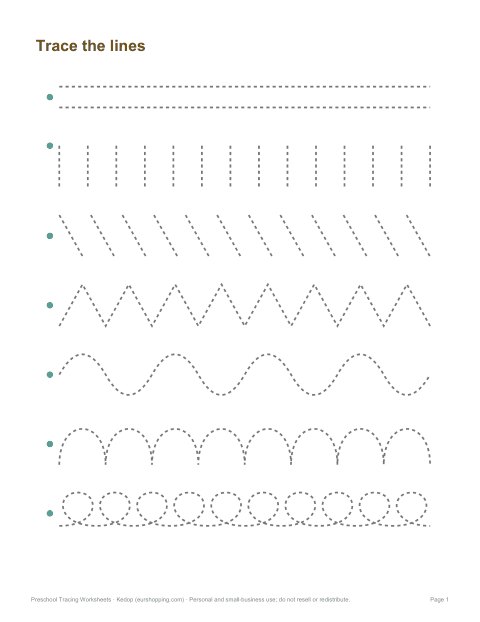
Tracing is how little hands get ready to write. These printable preschool tracing worksheets start with big strokes — straight, curved and zigzag lines — then move to shapes, letters and numbers, with an editable name tracing page to personalise. Large, clear guides and plenty of white space keep practice fun rather than frustrating.
- Instant download
- Editable Word
- Print-ready PDF
- 7-day refund
6 files · PDF, DOCX
Preschool Tracing Worksheets
Printable preschool tracing pages: lines, shapes, uppercase and lowercase letters, numbers 0–10 and an editable name tracing page.
- Line tracing (PDF)
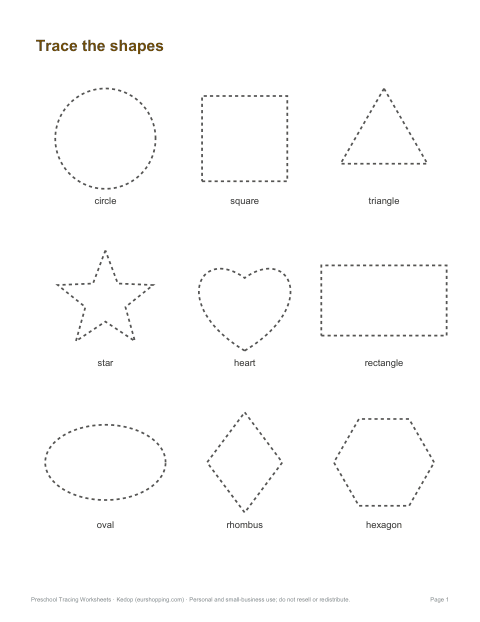
- Shape tracing (PDF)
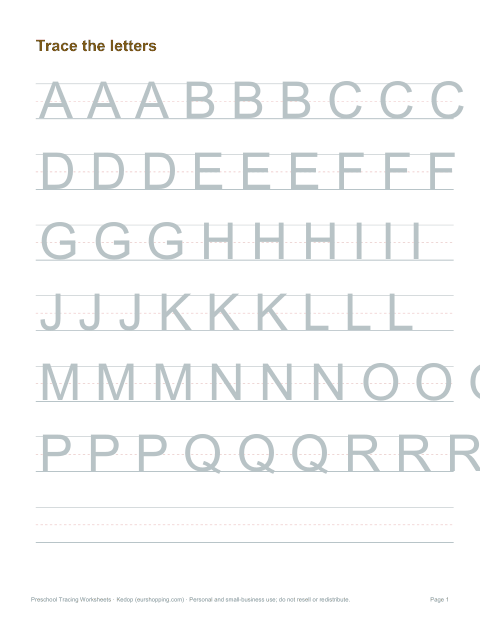
- Uppercase letters (PDF)
- + 3 more
$5.00 USD, one-time 6 files · about $0.83 each
- Instant download
- 7-day refund
- Secure checkout by Stripe
7-day money-back guarantee. Full refund within 7 days of purchase, even after you download.
Free sample: Line Tracing (PDF, 55 KB)
Preschool Tracing Worksheets
Printable preschool tracing pages: lines, shapes, uppercase and lowercase letters, numbers 0–10 and an editable name tracing page.
- Line tracing (PDF)
- Shape tracing (PDF)
- Uppercase letters (PDF)
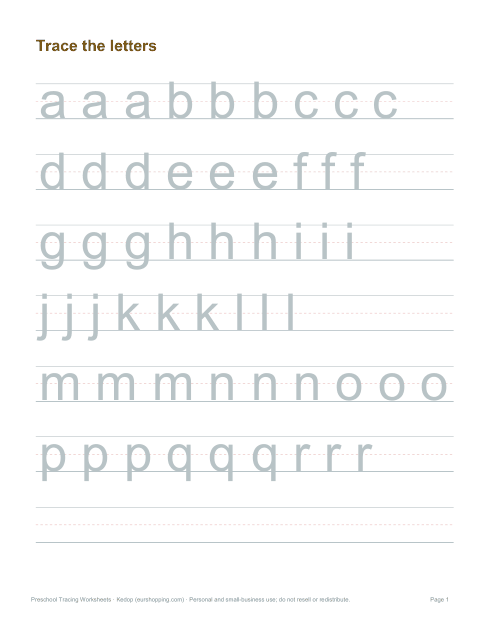
- Lowercase letters (PDF)
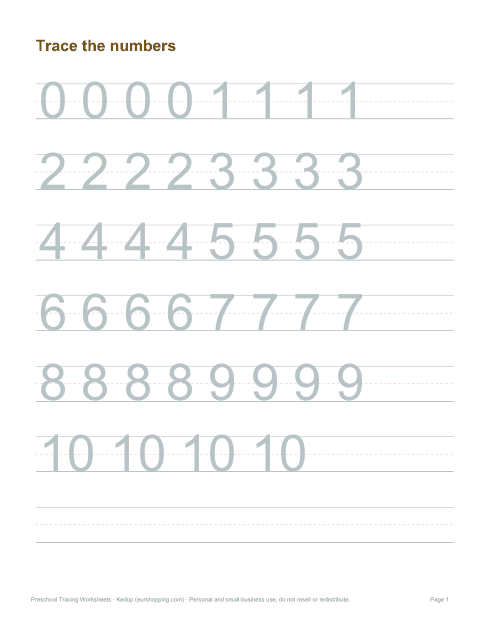
- Numbers 0–10 (PDF)
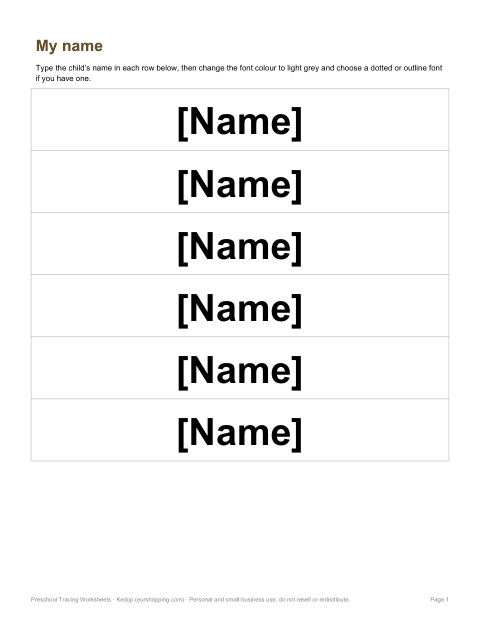
- Name tracing (DOCX)
Formats: PDF, DOCX. Instant download after payment (link valid 72 hours, up to 5 downloads). AI-assisted: the templates were drafted with AI help and reviewed and laid out before publishing.
$5.00 USD, one-time 6 files · about $0.83 each
- Instant download
- 7-day refund
- Secure checkout by Stripe
7-day money-back guarantee. Full refund within 7 days of purchase, even after you download.
Free sample: Line Tracing (PDF, 55 KB)
Full refund within 7 days — see the refund policy and license.
Free printables
Single sheets you can print right now, no sign-up. The full pack adds every sheet in one download plus the editable files.
 Printable Line Tracing Worksheet1 page · free PDF
 Printable Shape Tracing Worksheet1 page · free PDF
 Printable Uppercase Letters Tracing Worksheets2 pages · free PDF
 Lowercase Letter Tracing Worksheets2 pages · free PDF
 Printable Numbers 0-10 Tracing Worksheet1 page · free PDF
 Printable Name Tracing Worksheet1 page · free PDF
What is in the pack
| Worksheets | Skill |
|---|---|
| Line tracing | Straight, slanted, curved, zigzag and wavy lines |
| Shape tracing | Circle, square, triangle, star, heart and more |
| Uppercase letters | A–Z with guide lines |
| Lowercase letters | a–z with guide lines |
| Numbers 0–10 | Tracing and writing numbers |
| Name tracing (editable) | Type a child’s name in Word and print |
The order of pre-writing strokes
- Vertical lines (top to bottom).
- Horizontal lines (left to right).
- Circles (anticlockwise, starting at the top).
- Crosses (+).
- Diagonal lines (\ and /).
- Squares and X shapes.
- Triangles.
Children typically master these strokes gradually between about ages 2 and 5. Letters are built from these same strokes, so tracing lines and shapes first makes letters easier.
Pencil grip and posture
- Offer short, chunky crayons or triangular pencils — they encourage a tripod grip.
- Sit at a table where feet can rest flat and elbows are comfortable.
- Show how to hold the paper still with the other hand.
- Encourage slow, steady tracing rather than speed.
- Let children trace with a finger first, then with a crayon.
Making tracing fun
- Slip worksheets into a plastic sleeve and use dry-erase markers for endless reuse.
- Trace with different colours for each attempt.
- Use stickers as rewards at the end of each line.
- Trace in sand, shaving foam or on a steamy window for sensory practice.
- Tell a story: “the car drives along the road” for straight lines, “the bunny hops” for bumpy lines.
Fine motor activities alongside tracing
Strong hand muscles help children control a pencil. Play dough, threading beads, peg boards, tearing paper, using child-safe scissors and picking up small objects with tweezers all build the small muscles and coordination needed for writing. A few minutes of these activities before tracing can make practice easier.
Left-handed children
Left-handed children often find it easier to tilt the paper slightly to the right and hold the pencil a little further from the tip so they can see what they are writing. Tracing from left to right means their hand covers the line, so allow extra time and praise effort. Pencil grips and lighter pressure help avoid smudging.
From tracing to independent writing
Once a child traces a letter confidently, move to dot-to-dot letters with fewer guide points, then to copying under a model, and finally to writing from memory. Mix tracing with free drawing so writing stays enjoyable. Name writing is a great motivator — most children want to write their own name first.
Tracing sheet ideas for the week
| Day | Activity |
|---|---|
| Monday | Straight lines and zigzags |
| Tuesday | Curves, waves and circles |
| Wednesday | Shapes: square, triangle, star |
| Thursday | Letters in the child’s name |
| Friday | Numbers 1–5 and a free drawing |
Worked example
A four-year-old practises three times a week for ten minutes. Week one: straight and curved lines. Week two: circles, squares and triangles. Week three: the letters in their name, using the editable name page. Week four: numbers 1–5. The parent keeps finished sheets in a folder so the child can see progress.
When to seek advice
Children develop at different rates. If a child avoids drawing, finds holding a crayon very difficult or tires quickly, mention it to their teacher or healthcare provider; an occupational therapist can offer activities to help.
Formats
Print-ready PDF worksheets (US Letter; A4 with “Fit to page”) and an editable Word name tracing page.
Frequently asked questions
What age are tracing worksheets for?
Mostly ages 3–5.
What should preschoolers trace first?
Lines — vertical, horizontal and curved — then shapes, then letters and numbers.
Can I reuse the worksheets?
Yes, put them in plastic sleeves and use dry-erase markers.
Can I make a name tracing sheet?
Yes, type the name into the editable Word page.
Was AI used to create the worksheets?
The worksheets were generated by script and text drafted with AI assistance, then reviewed before publishing.